Saturday, January 26, 2013

401k Gold Investing Fundamentals | Liberty

Gold coins have become the right commodity to involve in the retirement program as well as your Individual Retirement Accounts as they have the highest long-term benefit. In the classes of investments that are utilized for retirement plans, gold IRAs are the most versatile.

Financial assets like bonds depend upon others? results and may vary with time but gold?s worth isn?t at the mercy of human error. This will make a gold Individual Retirement Account the best option for all types of retirement plans.

DeGaulle, previous French president, claimed that gold is without any national biases and it is recognized around the world as a commodity having constant price that stays unchanged. It demonstrates gold IRA to be the right vehicle for retirement programs. Real gold assets make the perfect solution for personal savings.

Gold Individual Retirement Account lessens instability for an individual?s retirement account. From older days, gold has constantly moved in the other direction as compared with stocks. So, it?s related negatively to those funds and has better price as compared to them in the stock market.

As said before, gold IRA investing is a great decision to make for a person?s retirement. It can let you preserve the worth of your dollars in the future. If you want to know more, check out Gold IRA

This entry was posted in Careers on by admin.

Source: http://dwiminneapolis.com/careers/401k-gold-investing-fundamentals/

wmt human nature arkansas football blackhawks howard johnson levon helm firelight

Abortion opponents march in Washington

Anti-abortion activists and supporters of legal abortion stand in front of the Supreme Court in Washington, Friday, Jan. 25, 2013, on the 40th anniversary of the Roe v. Wade decision. Thousands of anti-abortion demonstrators marched through Washington to the steps of the U.S. Supreme Court to protest the landmark decision that legalized abortion. (AP Photo/J. Scott Applewhite)

Anti-abortion activists and supporters of legal abortion stand in front of the Supreme Court in Washington, Friday, Jan. 25, 2013, on the 40th anniversary of the Roe v. Wade decision. Thousands of anti-abortion demonstrators marched through Washington to the steps of the U.S. Supreme Court to protest the landmark decision that legalized abortion. (AP Photo/J. Scott Applewhite)

Anti-abortion protestors march to the U.S. Supreme Court in Washington, Friday, Jan. 25, 2013, in a demonstration that coincides with the landmark U.S. Supreme Court decision that created a constitutional, nationwide right to abortion. Thousands of anti-abortion demonstrators marched through Washington to the steps of the U.S. Supreme Court to protest the landmark decision that legalized abortion. (AP Photo/Manuel Balce Ceneta)

Abortion rights protesters hold signs as anti-abortion activists march past the Capitol to the Supreme Court in Washington, Friday, Jan. 25, 2013, as they observe the 40th anniversary of the Roe v. Wade decision. Thousands of anti-abortion demonstrators marched through Washington to the steps of the U.S. Supreme Court to protest the landmark decision that legalized abortion. (AP Photo/J. Scott Applewhite)

Anti-abortion activists march past the U.S. Supreme Court in Washington, Friday, Jan. 25, 2013, as they observe the 40th anniversary of the Roe v. Wade decision. Thousands of anti-abortion demonstrators marched through Washington to the steps of the U.S. Supreme Court to protest the landmark decision that legalized abortion. (AP Photo/J. Scott Applewhite)

Sisters from the Disciples of the Lord Jesus Christ Franciscan community in Prayer Town, Texas, near Amarillo, join anti-abortion activists at the Supreme Court in Washington, Friday, Jan. 25, 2013, as they observe the 40th anniversary of the Roe v. Wade decision. Thousands of anti-abortion demonstrators marched through Washington to the steps of the U.S. Supreme Court to protest the landmark decision that legalized abortion. (AP Photo/J. Scott Applewhite)

(AP) ? Thousands of anti-abortion demonstrators marched through Washington to the steps of the U.S. Supreme Court on Friday to protest the landmark decision that legalized abortion.

The annual event took on added significance for many in the crowd since it coincided with the 40th anniversary of Roe v. Wade, the Supreme Court decision that created a constitutional right to abortion in some circumstances. The demonstrators, carrying signs with messages such as "Defend Life" and "Defund Planned Parenthood," shouted chants including "Hey, Hey, Ho, Ho, Roe v. Wade has got to go." They packed the National Mall and surrounding streets for the March of Life.

"I just felt this 40th year marked a huge anniversary for the law," said one demonstrator, Pam Tino, 52, of Easton, Mass, who also participated several years ago. "Forty is a very important year in the Bible as well, in terms of years in the desert. And I just felt like maybe this year that was going to be something miraculous that might happen. We might see something going forward with the cause."

With the re-election of President Barack Obama, she added, "we just have our walking papers. Now we just feel like we have to keep the battle up."

The large turnout reflected the ongoing relevance of the abortion debate four decades after the decision.

It remains a divisive issue with no dramatic shift in viewpoint on either side; a new Pew Research Center poll finds 63 percent of U.S. adults opposed to overturning Roe, compared to 60 percent in 1992. Earlier this week, abortion opponents marked the anniversary with workshops, prayers and calls for more limits on abortion rights. And even as Obama this week reaffirmed his commitment to "reproductive freedom," state legislatures continue to consider varied restrictions on a woman's ability to receive an abortion.

Among the speakers at Friday's rally was Rick Santorum, the former Pennsylvania senator and staunch abortion opponent who last year unsuccessfully sought the Republican presidential nomination.

He recalled the love and support the country showed for his young daughter, Bella, who was born with a serious genetic condition and whose illness led him to take some time off from the campaign trail. He cited his daughter's life ? "she is joyful, she is sweet, she is all about love" ? as a reason to discourage abortion even in instances when women are told that it would be "better" for their unborn children to have one.

"We all know that death is never better ? never better. Really what it's about is saying is it would be easier for us, not better for her," he said. "And I'm here to tell you ... Bella is better for us and we are better because of Bella."

He said the anti-abortion cause was made up of people who every day advocate for their position outside abortion clinics and at crisis pregnancy centers.

"This movement is not a bunch of moralizers standing on their mountaintop preaching what is right," Santorum said.

One demonstrator, Mark Fedarko, 44, of Cleveland, said he regularly stands outside of abortion clinics in hopes of discouraging women from going inside.

"There's God's law and man's law," he said. But I follow God's law first. Like it says right here, thou shall not kill. That's the end of the story. We need to protect these children."

____

Follow Eric Tucker on Twitter at http://www.twitter.com/etuckerAP

Associated Press

Source: http://hosted2.ap.org/APDEFAULT/3d281c11a96b4ad082fe88aa0db04305/Article_2013-01-25-Abortion%20Anniversary/id-6049bd390ab244e1a3073e63942815de

kola boof burmese python national signing day ferris bueller god bless america earned income credit super bowl commercials

Friday, January 25, 2013

DelBene subcommittee assignments, Judiciary and Agriculture ...

Congresswoman Suzan DelBene today announced her four subcommittee assignments for the 113th Congress.

In the House Judiciary Committee, DelBene will be serving on the Subcommittee on Courts, Intellectual Property and the Internet, which handles the administration of the U.S. courts, as well as oversight over information technology and copyright, patent and trademark law. Her second Judiciary assignment is the Subcommittee on Regulatory Reform, Commercial and Antitrust Law, which will tackle bankruptcy law, state taxation affecting interstate commerce and antitrust matters.

?My membership on these subcommittees will put me in a strong position to help businesses create jobs in a variety of industries critical to Washington?s economy,? said DelBene. ?By serving on these two Judiciary subcommittees, I will work to ensure that our laws keep up with our fast moving economy so local businesses can continue to innovate and grow.?

In her role on the House Agriculture Committee, DelBene will serve on the Subcommittee on Horticulture, Research, Biotechnology and Foreign Agriculture, which has jurisdiction over fruits, vegetables, organic agriculture, research and education. Her other Agriculture assignment is the Subcommittee on Conservation, Energy and Forestry, overseeing water, resource conservation, energy and bio-based energy production.

?Agriculture is a significant part of the 1st District?s economy, as well as Washington state?s economy as a whole. I?ll be a strong voice for our farmers and local growers, and I?ll fight to help our thriving agricultural sector, starting with a long-term farm bill,? said DelBene. ?I?m eager to get to work on these subcommittees, moving forward in a bipartisan way to deliver results for my constituents and build the foundation for a strong economy.?

Prior to her election to Congress, DelBene served as head of the Washington State Department of Revenue, where she oversaw more than 1,000 employees. Previously, DelBene pursued a successful career in business, working as an executive at Microsoft, and in biotech, technology and microfinance.

?

Source: http://www.bothell-reporter.com/news/188066501.html

creighton new smyrna beach st. joseph puerto rico primary manning peyton florida state

Brent holds above $113 on promising US, China data

SINGAPORE (Reuters) - Brent crude held above $113 on Friday, on track to post a second week of gains as robust economic data from the United States and China lifted the outlook for fuel demand in the world's two largest oil consumers.

Manufacturing in China and the U.S. grew this month at the quickest pace in about two years, while data suggesting German growth picked up boosted hopes for a swifter euro zone recovery.

Brent crude for March delivery had inched down 5 cents to $113.23 a barrel by 0710 GMT. U.S. crude slipped 17 cents to $96.12.

"Economic statistics from the U.S. and China support an outlook of moderate growth in 2013 against a backdrop of a lower risk environment," said Ric Spooner, chief market analyst at CMC Markets in Sydney.

"Any improvement in industrial demand will help overall oil demand."

Employment in the United States also improved with the number of new claims for jobless benefits dropping to a five-year low last week.

The positive global economic data has boosted investor appetite for riskier assets, buoying global equities and some commodities.

Investors are closely watching the Seaway oil pipeline, after its operator reduced on Wednesday the oil flow rate to the U.S. Gulf Coast from Cushing by more than half, to 175,000 barrels per day.

The 400,000 bpd pipeline is a critical link intended to ease the glut at the WTI contract's delivery point in Cushing, Oklahoma.

Despite the volume cut, front-month U.S. crude prices are on track for a seventh straight week of gains. Trading sources have said the pipeline could be back to full capacity soon.

Its operator Enterprise Products Partners has no timetable for restoring full flows through the pipeline, a company spokesman said.

"Refinery turnarounds, rising production of Canadian oil sands and Bakken shale will compete to keep pipelines congested in the first quarter," said Stephen Schork, editor of The Schork Report, an energy research letter.

The spread between Brent and West Texas Intermediate crude prices held around $17, after widening by nearly $2 on Wednesday.

In weekly inventories data, a larger than expected fall in gasoline stocks lifted RBOB gasoline futures by nearly 1 percent on Wednesday.

U.S. crude stockpiles rose last week as refineries in the country processed less oil, government data from the Energy Information Administration showed.

Crude inventories climbed 2.81 million barrels in the week to January 18, compared with expectations for a 1.8 million barrel rise.

Source: http://news.yahoo.com/brent-holds-above-113-promising-us-china-data-080334424--finance.html

affirmative action helicon zac efron and taylor swift real housewives of orange county bloom energy franklin graham jambalaya

Backpacking Or Leisure Travels - boynamalikas

Sorry, Readability was unable to parse this page for content.

Source: http://boynamalikas.blogspot.com/2013/01/backpacking-or-leisure-travels-what.html

vanessa bryant vanessa bryant Prince Harry naked Prince Harry Vegas Melky Cabrera Mayim Bialik Rich Kids of Instagram

3M CEO starts to lay out plans to boost performance

(Reuters) - 3M Co began to unveil on Thursday some of the steps Chief Executive Officer Inge Thulin is making to improve profitability at underperforming units.

Thulin, who took the top job at the diversified U.S. manufacturer in February, said last year that he had identified a handful of units that it would need to fix, sell or close.

The maker of Post-It notes and films used in television screens is merging its security and traffic-safety units, a shift that will result in the elimination about 300 jobs, Thulin told investors on a conference call to discuss fourth-quarter earnings, which met Wall Street forecasts.

He said he did not plan to make drastic changes to 3M's broad lineup of businesses.

"These situations are a few when compared to 3M's overall portfolio," Thulin said, adding that he plans to act quickly to fix businesses that the company identifies as troubled.

"They will not stay under strategic review for long," he said. "We will take action."

'DEGREE OF UNCERTAINTY'

The company, which beat Wall Street's sales targets because of strong demand for office products and from the electronics sector, said it expected to increase earnings by 6 percent to 10 percent this year, despite an uneven world economy.

"There remains a degree of uncertainty as we see some economies growing and others are slower to recover," Thulin said. "Healthcare is doing well, for example, while consumer electronics yet has to recover fully."

3M said fourth-quarter profit had increased to $991 million, or $1.41 per share, from $954 million, or $1.35 per share, a year earlier. The results met the analysts' average estimate, according to Thomson Reuters I/B/E/S.

Revenue rose 4.2 percent to $7.39 billion from $7.09 billion. Wall Street had looked for $7.18 billion.

"Solid organic growth in (the fourth quarter) leaves a good jumping-off point into 2013," said Vertical Research Partners analyst Jeff Sprague.

Shares of 3M rose 3 cents to $99.52 in morning trading on the New York Stock Exchange.

Some of 3M's strongest growth was in China, where sales were up 16 percent, sharply outpacing a 5.2 percent rise in the United States and an 0.6 percent decline in Western Europe, where economies "have stabilized but are not yet growing," Chief Financial Officer David Meline said on the call.

At Wednesday's close, 3M shares had risen about 16 percent over the past year, outpacing the roughly 14 percent rise of the broad Standard & Poor's 500 index.

Major U.S. manufacturers have largely beaten Wall Street's expectations this earnings season. On Wednesday, United Technologies Corp and Textron Inc both reported earnings that came in a penny ahead of consensus forecasts.

(Reporting by Scott Malone in Boston; Editing by Gerald E. McCormick and Jeffrey Benkoe)

Source: http://news.yahoo.com/3m-profit-3-9-percent-quarter-123945808--sector.html

trina rob dyrdek oberon donald driver donald driver robin thicke mariana trench

FCC Commissioner Robert McDowell Speaks on Communications ...

Last week, Commissioner McDowell spoke on the ?How to Generate Diverse Participation in the Telecom and Internet Spaces? panel during MMTC?s BBSJ Summit.? Below are his remarks, as prepared for delivery.
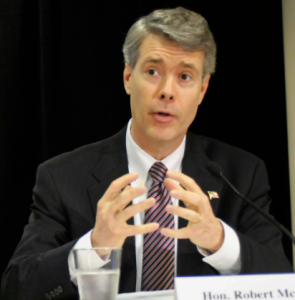
Commissioner Robert McDowellThank you to MMTC and David Honig for having me here today.? I am delighted to be back at an MMTC event.? It is a privilege to be part of such an esteemed panel of experts.? I am sure we will have a lively and constructive dialogue regarding diversity issues.

As you know, I like to study history, so I think having a historical context for our dialogue today is important.? In December of 2007, four other commissioners and I voted to adopt the 13 action items contained in the historic Diversity Order.? In other words, it was a unanimous Order.? Unanimity is virtually unheard of in Washington, but it is fairly common at the FCC.? This Order was ground breaking because, among many other things, it codified the first federal civil rights rule in a generation: the FCC?s non-discrimination rule prohibiting so-called ?no urban, no Hispanic? dictates in broadcast advertising.? Our rule ended insidious race-based dictates that served as barriers to entry for minority broadcasters.? Thankfully, the Third Circuit upheld this important and historic rule.

Unfortunately, many of the other rules adopted in the Diversity Order did not enjoy the same success.? The Third Circuit remanded 6 of the 13 rules, because it found that the Commission?s adoption of the eligible entity definition was arbitrary and capricious.? Even though I was born on the 13th of June and, as a result, 13 is my lucky number, apparently, 13 was unlucky for our diversity initiative.

Despite these setbacks, we must remember that the non-discrimination rule was first proposed in 1984.? The long road to its codification 23 years later can serve as a lesson in the virtues of patience and persistence.? Thanks, in large part, to the effective advocacy of MMTC, NABOB and other like-minded organizations, and specifically Sherman Kizart, we made large strides and achieved success.

As the FCC continues working on the 2010 review of its media ownership rules and diversity policies, I recognize that many inside and outside this room are not satisfied with the Commission?s diversity efforts of late.? I am among the unsatisfied, as I have stated many times over the years.? So, let?s discuss what should and could be done to ensure diverse participation in the media, telecommunications and Internet industries.? Unfortunately, many of you have heard me discuss some of these ideas before, but we must not relent.

First and foremost, as a matter of good government, the Commission must initiate and conclude the diversity studies, which are required by law.? I sense that the Third Circuit would greatly appreciate us doing that!? Warning: in this next sentence, I?m going to sound like a lawyer, because I am one.? Any action the Commission would undertake regarding race- and/or gender-based regulations to expand opportunities for minorities and women must satisfy the rigorous demands of the Constitution?s Equal Protection Clause, including the strict scrutiny standard under the Supreme Court?s Adarand[1] line of cases.? Although the Commission has taken constructive steps to improve its minority ownership data and acquire information regarding the information needs of communities, it must conclude these crucial studies to determine the best approaches to increase media diversity and whether race- and/or gender-based rules are legally sustainable under the Constitution.? Simply put, the Commission cannot delay these actions any longer.

In the meantime, I hope the Commission will pursue legally sustainable gender- and race-neutral means to increase diversity, including minority and female ownership, such as launching an incubator program, similar to the one proposed by MMTC.? (And many thanks to MMTC under David?s leadership for your helpful contributions to FCC policy making over these many decades.)? Incubator programs could be especially effective in introducing new entrants into the radio market.

The Commission also needs to seriously consider MMTC?s 46 other ?race neutral? proposals.? Some of these proposals are outside the context of the media ownership proceeding or need Congressional action, but we should move forward as best we can.

For instance, throughout the current media ownership proceeding, many advocates have underscored the difficulties in accessing capital.? Unfortunately, this is not a problem the FCC can directly fix.? Nonetheless, the Commission should continue its efforts to assist small and minority- and women-owned businesses to locate financing by connecting people who have money with people who need money, such as through workshops and mentoring.? Furthermore, we should adopt policies and programs that will remove barriers to obtaining capital.? Like all entrepreneurs, MMTC?s members, and all Americans for that matter, would benefit tremendously if U.S. tax and regulatory policy did more to encourage the free formation and exchange of capital.

Included in those policies should be a new and improved tax certificate program.? Providing broadcasters with a tax incentive to sell to small and disadvantaged businesses would dramatically increase the volume and frequency of such exchanges.

More generally, we should revitalize bipartisan efforts to spur the creation of urban enterprise zones.? These areas are free from excessive taxes and regulations to attract new job-creating businesses.? Building on that concept, broadcast entrepreneurs could leverage the freedom provided by enterprise zones and grow stronger while serving urban audiences and enhancing their local communities.? Not only would such policies increase media diversity, but we would also witness a tremendous economic surge in America?s urban cores.

As for regulatory actions that the Commission is currently considering, it is time to eliminate the 1975 newspaper/broadcast cross ownership ban.? A growing body of evidence indicates that this obsolete rule is actually producing the opposite result of its intended effect by exacerbating the demise of diverse voices that provide local news and information.? In today?s economic climate, new investment dollars will continue to flow towards less-regulated new media as opposed to providing a much-needed capital infusion to existing news-gathering operations that are struggling to continue to serve American communities.

It makes no sense to me that, in cities such as Chicago where several daily newspapers serving local ethnic communities proliferate, the ban prevents minorities and women from distributing content across all platforms ? all in the name of diversity.? The notion that a producer of content is allowed to distribute its product over radio, television, the Internet, outdoor advertising and other platforms, but that printing that same content on a piece of paper every day is ? somehow ? a threat to diversity and democracy, is nothing more than a defenseless policy that is out of touch with today?s dynamic and competitive communications market.

I applaud MMTC for recognizing the current climate facing the newspaper industry in not ?oppos[ing] the relaxation of the cross-ownership rule so long as the rule, as applied, would not discourage or lead to a decrease in minority ownership.?? I know it was not easy for MMTC to arrive at this new policy juncture, but a modernization of this rule will help your members and consumers across America.

Finally, the Commission must resist calls for limiting, and therefore discouraging, the use of joint sales, shared service, and local news service agreements.? These agreements provide efficiencies that lower operation and production costs for broadcasters enabling them to deploy more resources that benefit more consumers.? In fact, I have heard from many broadcasters that such arrangements have directly and indirectly helped foreign-language and women- and minority-owned stations enter markets and improve their programming.

Furthermore, these types of agreements are bringing new sources of news and information to smaller towns across America.? For instance, tiny markets such as my father?s hometown of San Angelo, Texas or Utica, New York would only have one source for local news were it not for joint sales agreements.? Simply put, JSA?s add hours of local news to smaller markets that would not have it otherwise.? The Commission must not regulate without a full understanding of how these agreements are used and how they enhance viewpoint diversity and augment local news and information programming in the places that need it most.? By creating new counterproductive attribution rules targeting these agreements, especially with a dearth of evidence to support such a radical policy shift, the FCC may end up raising costs, reducing local programming and ultimately diminishing diversity.

I look forward to discussing these ideas and others with the panelists.

?


[1] Adarand Constructors, Inc. v. Pena, 515 U.S. 200 (1995).

Source: http://broadbandandsocialjustice.org/2013/01/fcc-commissioner-robert-mcdowell-speaks-on-communications-opportunities-for-all-at-mmtc-broadband-and-social-justice-summit/

pro bowl 2012 roster yamaguchi road house occupy oakland occupy oakland morgellons disease arik armstead